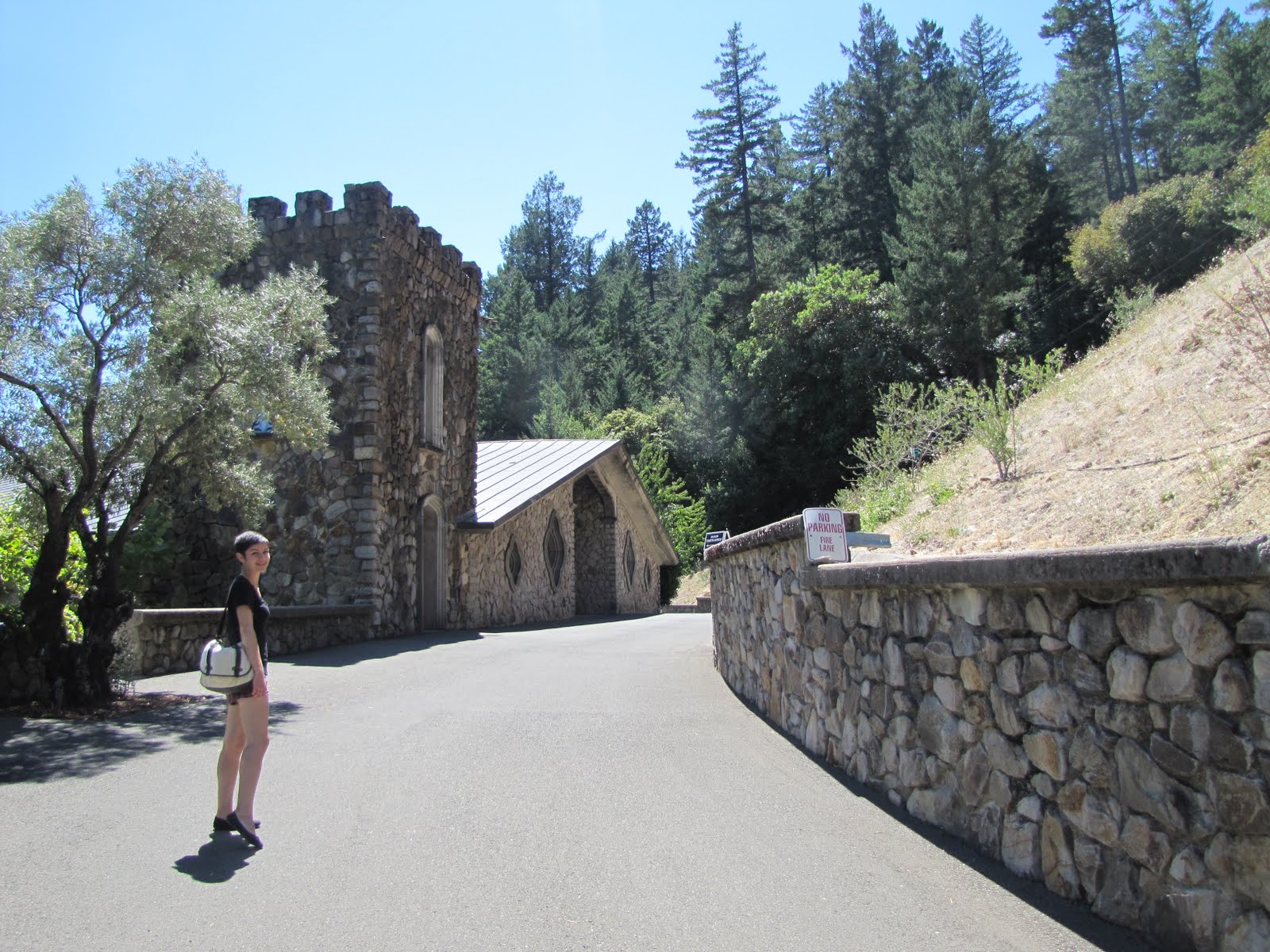
Wednesday, September 14, 2011

Buying Wine on a Budget

My dad once said, “It’s a funny thing about wine.  Once you start tasting better wines, which seem to cost more, it’s hard to go back to what you had before.”

When he said this, I couldn’t disagree.  For quite some time, I loved going to places like Trader Joe’s and finding a five dollar bottle of wine to take home and enjoy with some pizza or all by itself.  I thought White Zinfandel was delicious and that Barefoot Zinfandel was the pinnacle of wines.  After all, how could a more expensive wine be better than these? 

Then, one night while dining with some friends, they ordered a bottle of 1994 Heitz Cellars Bella Oaks Cabernet.  Once taste of this wine and the light bulbs all went on at once!  “Oh, so THIS is what people who love wine are talking about!!!”  Everything changed.

I spent a few months after that looking for this particular wine and, after quite a few phone calls and some rudimentary web searching, I surmised that there were only 8 bottles left in the Los Angeles area.  I bought three at the very big price (at the time, for me anyway) of $38 per bottle.  Funny enough, I really knew nothing about wine except that this one was delicious.  Of course, I began to wonder, “Could there be other wines this good out there?”

Thus, my quest began.  I bought everything.  I put the wine on credit cards.  I did whatever I could to learn, taste, experience, and find out about the seemingly immeasurable variety of amazing wines.  It was like taking a trip without ever leaving the farm.

And it was very expensive.  And it probably wasn’t the best way to go about learning about wine.  But it’s what I did and, I did learn some lessons.  And I drank too many of these wines way too soon because I didn’t fully understand the concept of aging. 

Anyway, the most important lesson I learned was that price isn’t necessarily an indicator of quality and taste – at either end of the spectrum. 

With this, I took on a personal challenge to find wines at lower prices that would blow my mind.  Essentially, I set out to get really good wine really cheap!!! 

And I was pleasantly surprised.  It was a reawakening of the wine adventure!  And, as someone who loves food and considers wine a necessary part of the culinary experience, I became reinvigorated about wine and the idea that there were some very good, and some great tasting wines at prices that were mind boggling in terms of the quality that I found. 

It actually became a very fun challenge to set a budget for wine that was considerably less that what I was used to spending and see how much yummy wine I could buy in that range. 

The question is, how does one start looking for really good wine for really low prices?

For me, there are several approaches that one can take.  The positive aspect is that, because we are talking about fairly low prices, less than a 6-pack of domestic beer in many cases, it’s a bit more financially okay to take some risk and do more exploration than if we were talking about bottles in the fifty dollar range.  That said, here are a few approaches, although I recommend trying any combination of them in order to learn where the deals are and get a better idea of how competition can work in your favor.

Random Selection

With this, I’ve gone to the market and simply looked for bottles that were at a certain price point.  For example, if I’ve decided to spend $40 on wine, then I’ll get as many bottles as I can for $40.  I might even mix them up a bit; some Australian Shiraz, Washington Merlot, California Zinfandel, and some Malbec from Argentina.  Most local grocers carry some low cost wines in the $5-7 range that would enable you to pick up half a case or more for $40.  I like this approach because it almost compels the buyer to explore new territory.  In addition, because of the price, finding a bottle that you don’t like isn’t too big a headache.  Finally, most of the wines sold in local grocers tend to be young – perfect for low cost wines that typically aren’t created for aging but for immediate consumption.  Another advantage of this approach is that, with the commonality of “membership” cards, it’s very easy to spot wines that have been discounted, some significantly, enabling you to find wines that ordinarily might fall in the $10-15 range.

Descriptions on the price tag

This is very similar to simply using random selection, except it may involve reading some of the little notes that many groceries will place next to the price tag.  Sometimes these descriptions will include rating information or awards won at local fairs.  My only caution on this is that the vintage on the shelf might not match the vintage on the little description card.  But, like our first approach, this is not too bad since we are not breaking the bank to buy the wines.

Two Buck Chuck

Trader Joe’s sells wines from the Charles Shaw Winery, more commonly known as two-buck Chuck.  This is because each bottle is sold for $1.99.  I’ve tried a few of them and, honestly, they tasted like two dollar bottles of wine – a bit like wine coolers without the fizz.  Occasionally, however, there are surprises!  I’ve tasted a Chardonnay and a Zinfandel a couple of years ago that, although not the most complex wines on the planet, were actually very drinkable and pleasant tasting.  For two dollars, one’s expectations cannot be too high so it’s a nice surprise when one comes along that tastes like it cost, well, shall we say five dollars?

The Wine Warehouse

The internet is a great place to search for wines.  Many wine specialty warehouses provide on-line ordering of their wines as well as the ability to search their inventory during the on-line shopping experience.  This is one of my favorite approaches as many of these stores offer advanced search options which let the buyer focus on particular varietals or regions as well as price and even ratings from some of the more well-known publications such as Wine Spectator and Wine Enthusiast.  Since I live in California, some of the stores that I’ve used are KL Wines (www.klwines.com), The Wine Exchange (www.winex.com), and The Wine Club (www.thewineclub.com).  BevMo (www.bevmo.com) is also a popular one.  Another advantage of this approach is that the buyer can compare prices and quickly get an indicator of what is possible in terms of price points.  After some research you will notice that the prices can vary from 30-40% from place to place.  Finally, for me, this approach is quite fun – and somewhat educational as well! 

Club Stores

Stores such as Costco and SAM’s sometimes have fantastic selections of wines, even if the number of wines is a bit limited.  They have the purchasing power to have quite a compelling inventory of high end AND low end wines.  They also almost always post tasting notes and rating information.  In addition, the wines are usually organized by varietal and there is usually a section that caters to the buyer who is looking for wines under $10.  One more thing to observe is that Costco sells its’ Kirkland brand of wines which are actually wines from known wineries bottled under the Kirkland label.  They cannot disclose the source of these wines, but some are quite good and gaining respectable scores from the magazines that rate wines.

The Wine Magazines

Wine Ratings are somewhat suspect but, in general, fairly reliable in my opinion.  I can’t say that a 90 point rated wine at Wine Spectator is going to taste like a 90 point wine to everyone who drinks it, since we are all human and wine tasting is a very subjective process.  However, I’ve not had an experience where a wine was rated highly and it tasted really bad when I opened it.  That said, I have actually opened wines that were rated in the high 70’s or low 80’s and found them to be quite good.  Like the stores that have their wine inventories online, the Wine Magazines have a subscription service that is about the same as a magazine subscription which will enable you to do the same kind of searches by vintage, rating, region and even specific wineries.  The prices listed are the retail prices and are not usually very practical except it might help you recognize when markets have elevated the prices beyond what the wine would be sold for at the winery in order to appear like they are giving you a good deal on something else.  For example, BevMo has a 5 cent wine sale where, if the customer buys one bottle from a designated selection of wines, the 2nd bottle is only 5 cents.  However, the price of the first bottle is a non-discounted bottle so one has to average the cost of both bottles to get the per bottle cost before comparing it to prices elsewhere. Usually it’s a pretty good deal – if you want two bottles. 

Good wine doesn’t have to be expensive.  Occasionally, low cost wines are great and, because they are low cost, stumbling upon a bad one isn’t that upsetting and finding one that is pleasing is a wonderful surprise! 

Cheers!

Wednesday, September 7, 2011

Hidden Wine Gems of California

If you do most of your wine shopping while also buying groceries, you might notice that most of the major grocery chains seem to sell the same wines.  It’s not uncommon to find respectable offerings from the likes of Columbia Crest and Chateau Ste Michelle from Washington, or Sterling and Robert Mondavi from Napa Valley, or Yellow Tail from Australia.  All of the above wineries certainly have something delicious to offer for every taste; finding similar wines in multiple locations also gives you the option of comparing prices and looking for the best deal. 

But, what if you want to try something new?

At this point, you have a couple of options.  You can start with the internet and go to a website such as Wine.com or Bevmo.com.  Surely, these sites give you some flexible browsing and shopping options as well as some general descriptions and ratings of various wines.  In various regions of the country, there are some wine warehouses that also have websites.  In Southern California, for example, I like browsing the inventories at Napa Cabs, The Wine Club, The Wine Exchange, and KL Wines. 

There is another option as well.

Hit the road.  Go wine tasting and pick something unfamiliar.  Now; the upside of this approach is that you may find a wine that you never even considered and discover that you really enjoy it.  The downside is that you may find some wines that you never want to taste again.  Truly both experiences are possible on any wine trail. 

What I’d like to do is suggest a few wineries that I’ve visited and share what I enjoyed most about their wines.  Take note that these are mostly wines that you are unlikely to find in the local market, although you might get lucky shopping at a store nearby these wineries.  Also, each has offerings that are only available directly through the winery.  All have websites to assist you with buying wine and even joining their wine clubs in order to receive regular shipments of new releases.

In no particular order, here are some of the wineries in California that I’ve discovered; some more easy to find than others, but all with very tasty wines.

Terra Valentine (www.terravalentine.com)

Terra Valentine is located about 2,100 feet above Napa Valley.  The location is quite secluded but worth the drive west of St. Helena.  They only offer tastings by appointment but we were able to get a same-day appointment.  They offer up an array of delicious wines including a magnificent Sauvignon Blanc and Pinot Noir.  Their Sangiovese just cries out for some pasta with red sauce.  That said, their Cabernets are elegant and such a pleasure to taste.  I’ve also had the great delight of pairing their Spring Mountain Cabernet with some grilled rib-eye steak on two occasions and I’m already looking forward to the third.
 

I discovered Topel during a visit to Healdsburg in Sonoma County.  I actually found their tasting room during a walk around central Healdsburg, a very charming and even somewhat vibrant small town that is developing a beautiful blend of country living and culinary sophistication.  Anyway, at Topel I found some really great wines from a winery I’d not heard of until my visit.  At the winery, it was explained to me that that Topel was known for its' Cabernet.  The bonus for me was tasting their 2007 Serendipity Monterey Pinot Noir. This wine tastes in two waves: the first filled with soft fruit, then 2nd wave with the spicy characteristics that give it enough structure to be diversely food friendly.  They also make some very nice Syrah.  Topel’s wines aren’t as easy to find as some of the others on this list, but if you are in Healdsburg, CA, it’s worth a visit.


About 2 hours south of San Francisco, west of the quaint and upcoming town of Paso Robles, are some of my favorite wineries.  Many of these wineries are starting to gain popularity and you may find several wines from this region on your grocer’s shelves.  Names such as Justin, Wild Horse, Tobin James, and J. Lohr are just a few of the more popular wineries.  However, on Vineyard road, just about 2 miles north of Highway 46 west, is one of my all-time favorite wineries, Denner. 

I cannot sing Denner’s praises enough.  They wide array of varietals including Viognier, Mourvedre, Syrah, and Grenache are splendid across the board.  A few of their wines have some really interesting names, such as the Ditch Digger, which is a GSM (Grenache, Syrah, Mourvedre) blend or the Dirt Worshipper (Syrah and Viognier).  Tastings are done by appointment only, however and I recommend calling ahead.  Many of the Denner wines are starting to gain recognition with several accolades in the popular wine trade magazines. 


Santa Barbara County is generating quite a local buzz with the quality of wines being produced there.  In fact, that buzz is starting to go national.  I’m just waiting for some of them to show up at the grocery store around the corner.  However, the fact that they haven’t, simply means it’s another reason for a road trip. 

Jaffurs makes wines in the Rhone tradition similar to those of Denner with a bit more subtlety.  One of my favorites here is their Grenache Blanc with its’ refreshing and zesty tropical flavors.  One cannot dismiss their Petite Syrah or Grenache – both elegant and filled with aromas and tastes of brilliant and haunting dark fruit.  The structure of these wines is quite a thrill.  This brings me to their Syrah. 

From Jaffurs 2008 vintage, they offer up 6 vineyard-specific Syrah bottling.  It is easy to find a good one because they are all good.  It will be quite a bit more difficult to just walk out with one, however, Jaffurs makes this decision a bit easier by only offering them to wine club members.  I assure you; once you taste their wines, the decision to be a club member will seem like a natural next step in the process.


About 80 miles Southeast of Los Angeles is the town of Temecula.  Just East of Temecula are several wineries, many whose wines are readily available throughout Southern California.  In my opinion, Temecula is an up-and-coming wine region that is still carving out its identity as a serious player in the world of wine.  Clearly, they are moving closer to that with each vintage. A great example of this is Leonesse. 

I highly recommend their vineyard selection Syrah offerings as well as their signature selection Merlot.  Before even tasting these wines, the nose will let you know that you’re in for a treat!  They also make a fantastic and surprisingly complex Zinfandel from their signature selection as well.  What’s more, you can enjoy the Leonesse wines amidst a beautiful hillside setting with a scenic view of Palomar Mountain.  There is plenty of room to walk around and find your own “perfect tasting spot”.

For our purposes here, I’ve only mentioned a few wineries.  I discovered these mostly by accident or sheer curiosity.  There are many more than this on my list of recommendations.  My best recommendation, however, is to take wine tasting with a sense of adventure and discovery.  Aside from drinking plenty of water, don’t rush.  Give yourself time to explore and take in each wine that you taste.  Ask questions.  Have fun.  You may just find something that you can take back home and surprise your friends with. 

Be safe.

Cheers!

Monday, September 5, 2011

Wine Etiquette

In the wine-infused movie, “Sideways”, one of the characters uncharacteristically tells the server at a wine-tasting bar to “hit me again”.  This is because he is distraught over failing to secure a book publishing deal.  When the server refuses, he grabs the bottle to pour his own glass and incites a tug-of-war with the server.  When the server reclaims the bottle, our protagonist grabs the wine tasting spittoon and, in a scene that would make anyone who knows of its contents, squirm in their seat.

A less extreme example of non-etiquette involves a dinner out with my wife and another couple who also happen to be long time friends, very good friends of ours.  Our friends, who I’ll call Bob and Nadine, enjoy fine dining and good wine in spite of knowing very little about wine.  Like most people, they simply understand that a good wine, by definition, is one that tastes good. 

For this particular outing, I brought a bottle of 2006 Sea Smoke Southing Pinot Noir – a very nice bottle from my cellar that probably could have aged well beyond our evening out.  I selected this particular bottle because it would go well with the food at this seafood restaurant.  We all agreed to start with the Sea Smoke just after ordering.  Our server poured glasses for each of us; we raised a toast and sipped from our glasses.  Well, three of us sipped, while Bob finished about half of his glass in one swallow, followed by a second swallow that emptied the glass.  He immediately exclaimed how delicious the wine was and poured a second glass, which was also gone within five minutes.  Subsequently, he poured a third glass, emptying the bottle. 

I didn’t want to stay anything to Bob because he simply didn’t know any better.  From his perspective, it tasted good and was there for the drinking.  Surely, there was no point in embarrassing a good friend who, I know, would have felt quite badly and probably bought another bottle from the restaurant.  From my perspective, our friendship and ability to hang out and enjoy our time together is much more important and valuable than even the most expensive bottle of wine.

These stories bring up a question: what is proper wine etiquette?   Coupled with this, at what point do the many ideas on etiquette go beyond what is necessary and appropriate in various settings? 

I believe wine is there to be shared as part of the culinary experience among friends or like-minded individuals.   The experience should be fun and festive, although there are times when it can also be serious and contemplative.  For our purposes here, I’m going to focus on the fun and festive.

Experimentation

With all of the notes that follow, feel free to experiment.  Some of the things you try will work better than others, but you will learn.  You will also get educated on what you like best and what your friends and/or associates like as well. 

Technical stuff

Without going into the nuances of storing wine for long term aging, I’ll just focus on a couple of simple tips.  Lighter wines are typically served slightly cooler temperatures than darker wines.  However, beware of the idiom “at room temperature” since, if the temperature in your room is 70 degrees F, it’s too warm for any wine to be served.  Reds are served well in the high 50 to low 60 degree range while whites work well in the low 50’s.  As with all ‘guidelines’, they are not scientific. 

As for the glasses, clear and clean is a good place to start.  Glasses for white wines tend to be a bit narrower than glasses designed for bolder or subtle and complex wines.  You should note here that there are many complex white wines that can be just as bold as dark red wines.  As a basic rule, the glass should hold about 2-3 times the amount that will be poured into it.  It should enable people to see the wine clearly and take in its’ aromas in advance of actually tasting it.  There are many glasses that will accomplish these things.  As you get farther into wine, you will start discovering even more details as to glass sizes and shapes that are designed specifically for certain types of wine in order for those wines to fully be expressed and appreciated. 

A topic that has come up in recent years is that of corks versus screw caps.  In the past, serving a wine from a bottle that is screw capped might appear in bad taste or indicate a cheap wine.  This is no longer the case as more and more medium to higher end wines are being bottled in screw caps.  A few years from now, there will be very little stigma attached to screw caps.

Sharing and Pairing

First off, there’s something very tranquil about pouring a glass of wine in solitude and reading a book or just relaxing at the end of the day.  In the company of others, however, wine is to be shared.  Most people I know are very appreciative when offered a glass of wine.  The offer doesn’t need to be accompanied by any explanation of the wine or description, unless your guest asks. 

I also recommend serving a lighter wine and a heavier wine, unless a food pairing would be offensive with one or the other.  If a meal is part of the gathering, it’s probably a good idea to have a ‘starter’ wine to enjoy prior to the meal and a wine (or wines) to enjoy with the meal. 

It’s also a good idea, if you know that a guest enjoys a particular wine, to have some on hand for them.  If someone brings a bottle, it’s also okay to ask them discreetly if they want to pour it right away or if it is intended to save for later – especially if you are among friends and family. 

As for the food pairings, I love to experiment – sometimes just to find out if a particular wine can handle a certain kind of food.  However, this is not something to be done in mixed company unless everyone is on board with this approach.  Instead, as a general guide lighter wines (in terms of color), tend to work better with lighter colored foods.  For example, serve white wines with Chicken or Sea Bass or Reds with Steak and hearty red pastas.  And, remember, that it’s okay to experiment.  Part of the fun with wine and food is discovery!

Restaurant wine lists

I used to be quite intimidated by wine lists.  I was afraid to say the wrong thing or appear like I knew too much while appearing completely ignorant.  I didn’t want to ask a stupid question or buy a wine only to find out I didn’t like it and not know what to say.  What if I order something and those with me don’t like it?  What if I overspend just because I don’t know any better?  Is it okay to bring my own bottle?  Will the restaurant be offended?

I’m going to try and tackle these questions in a basic sense. 

First off, understand that any reasonable wine steward or, as they are called in the wine business, Sommelier, has already experienced  customers who know very little all the way to the other side of the spectrum of those who know even more than they do.  Most questions are okay.  A good Sommelier will quickly recognize how to answer your question honestly and with sincere hospitality. 

Second, if you are on a budget, it’s okay to ask about a wine that is in the price range you have already decided upon.  This will tell the Sommelier where you’re at without having to be explicit about your spending level.  The target price is up to you.

Third, if you are the one who arranged the meal outing, it’s okay to ask someone else at the table, especially if you are aware that someone is particularly knowledgeable about wine, to select a bottle.

Fourth, there are some restaurants that have a wide variety of menu offerings with which one particular wine will not always go well with.  There’s nothing wrong with asking others at the table if they want to simply order by the glass.   You can also ask the Sommelier advice on how best to pair wines with what everyone has ordered.  Remember, a big component of enjoying wine is all about fun and togetherness.  When the Sommelier comes to the table, the attention of all will probably be naturally diverted to their direction.  At this point, you can ask the folks at the table their opinion.  Questions like, “What do you think we should order?” are fine at this point.  Most Sommeliers I’ve known love engaging in wine-related conversations – they understand the social nature of enjoying wines and usually appreciate a short question and answer endeavor if it means that they can help make your experience more enjoyable.

Finally, if you’re going to bring your own bottle, call ahead and find out if this is okay and what the restaurant’s corkage policy is.  Remember that beverages are usually a reliable profit source for restaurants but customer service is their first goal.   It is also advisable to bring a bottle that is worthy of the cuisine at the restaurant.  In other words, a cheap bottle of wine might be appropriate for a local pizza joint but not appropriate at a world class steakhouse.  Also, if you are going to bring your own bottle, bring one that isn’t on the restaurant’s list.  This is usually easy to determine as many restaurants now post their wine lists on their website.

My last note on bringing your own bottle is, offer a taste to the Sommelier and, if the restaurant allows it, your server.  A small bit to the floor manager is also an option.  I do this every time I bring a bottle and the folks at the restaurant are very appreciative of this.  Sometimes, I’ve brought something they’ve never tried before and they’ve gone as far as to waive the corkage fee.  One manager brought out a complimentary glass from a wine that wasn’t even on their list! 

The alcohol angle

At the risk of overstating the obvious, here it is.  As amazing as wine is, it is important to remember that it is an alcoholic beverage.  Some wines have quite a bit of alcohol, in fact.  People who have learned to enjoy wine as part of the culinary experience understand that the objective isn’t to get buzzed any more than having 3 desserts will make you feel better at the end of the meal.  It’s about the scents, tastes, and nuances implicit in the pairing of wine to the social element or to the food or both.  Moderation is the key.  Also, if you are looking to learn more about wines, know in advance that any level of intoxication – however mild – can impair your ability to discern and truly enjoy the subtleties of the wine and how it works with the food – never mind the impairment of motor control!  Pacing the enjoyment of wine in the midst of tasty foods, engaging conversations, and most importantly, time spent with friends, will merely enhance the experience and make everyone want to come back again. 

If you have any other thoughts or suggestions, I’d love to hear from you.

Cheers!

Tuesday, August 30, 2011

Terra Valentine

Spending time with my daughter, Serena, while enjoying a wine tasting trip through northern Napa Valley is one of the highlights of my life.  Our children grow up.  After all, that's the idea, anyway.  And, as they get older, they move on.  Time spent with them is more and more precious.

Some say the time with them as really little people who are new to this world is the most precious.  Yes, it's precious... but there are many more times during this stage of life than when they get older.  The moments together become more and more fleeting and time with them often seems impossibly out of reach except for a few stolen conversations on the phone a midst their own lives and schedules.

So, to hang out with Serena and make some new discoveries along the way as a father daughter team-for-a-day is quite an experience.  One to treasure.  A beautiful treasure.

Until a few months ago, I'd not heard of Terra Valentine.  A friend opened a bottle of their Spring Mountain Cabernet over dinner one night and, I must say, the wine was delicious.

Delicious.

Delicious.

Oh, it was very good, too.  So, I wanted to make this our second stop - and last.  I'm not a big fan of getting buzzed to the point where I cannot taste the wines.

Terra Valentine can only be visited by appointment.  They don't make a whole bunch of wine and I can truly understand how they could be inundated with tourist tasters who are more interested in sucking down a bunch of vino like they were at a party instead of showcasing their wines to folks who are more serious about what they are tasting than how they are wasting away.

First off, thanks so much to Heidi for the great presentation and wonderful hospitality.  As soon as we arrived, we were treated like friends invited into a home.

The winery is simple.  And beautiful.


We were greeted with a generous pour of Sauvignon Blanc, a very delicious and luscious wine.  This wasn't just some cheap get-to-know-you vino.  This is a statement: you are going to have a very special time here and we want you to enjoy every moment.

There was a short tour - a walk around the building and into the cellar where the barrels and mechanics of wine making take place, past the employee patio area, complete with a barbecue and a view, then back upstairs to the tasting room - more of a banquet room.

Fireplace.  Stained glass windows.  Long table.  Wine glasses.  Wine bottles.

Each person gets their own little cheese platter adorned with fresh rosemary and some locally made chocolate.
Then we got down to business.  The business of fun!

There were 6 of us in that room, besides our gracious host and wine facilitator.  (That's my term at this point.)

The Russian River Pinot Noir is... wonderful?  Hmmm... no, that's not it.... amazing?  Yes, but that's not it, either.... I think I remember saying that I wanted a room in my house to smell like the Pinot Noir.  It's that good.  This isn't a Pinot that Terra Valentine makes because, "well, we should do a Pinot".  This is a serious wine for people who love great wine.

The Amore Sangiovese is succulent and made me hungry.  Hungry for anything with some spices and seasonings and pasta and sauces... and.... and....

Then we tried two Cabernet Sauvignon's.  Wurtele and Yverdon.  Same grapes.  Same aging.  Same harvest.  Same everything except where they are grown.  Different elevations.

Different wines.  Both great.  Really great.

Serena and I kept looking at each other with these goofy "I'm having a great time, are you" smiles on our faces.  How cool is this.  How cool is this!!!!!

The tasting ended with a bit of the Estate Riesling - consistently as good as everything else.

My jaw had dropped.  What an incredible find!

What a wonderful day.

Thank you, Terra Valentine for being a part of my day out with Serena.  Thank you, thank you, thank you!

Cheers :)

Chateau Montelena

The first time I tried a wine from Chateau Montelena was at the Madison Steak House in Long Beach back in 2000, or 2001.  I don't really remember.  What I do remember is that we ordered steak and a bottle of 1997 Calistoga Cuvee, which is basically a really amazing Cabernet.  I remember tasting the wine and flipping out.

You see, I was new to wine.  This was only the second really good bottle of wine that I'd ever tasted, the first being a 1994 Heitz Bella Oaks Cabernet.  It was these two bottles that got me started on a journey of wine exploration that still continues today.

I remember looking for Chateau Montelena on the web.  The internet was somewhat rudimentary back then, at least when compared to the dynamic content on most websites today.  I found them and saw a picture of this stone chateau with much greenery around it and on it.

I wanted to go there.

A couple of weeks ago, I got my chance.

My lovely daughter, Serena, invited me up to Berkeley to hang out with her - daddy daughter time - and, one of the endeavors she included in our bonding time was a wine tasting trip to Napa.  Excited as I was, I decided to schedule our tasting, starting with Chateau Montelena.

Serena and I love the movie, Bottle Shock.

The movie doesn't do the winery justice, although it is a very fun film.

The winery is simply beautiful.  It's nestled of a small back road north of St. Helena, cut into a hill ripe with greenery and what appear to be natural springs.  Even if they are fountains, I'll call them springs.

However, there is a fountain.  It's located at the entry way to the tasting room.  The foyer is the kind of place where one could imaging pulling up a cot and sleeping under the stars while the rustling water trickles over moss-covered stones nearby.


Of course, this would be enhanced with the lovely wines of Montelena.

There's a reason that this is a well-known winery.  The wines are really good.  The people are really friendly and, after some quite in depth conversations about wine and the fantastic environment that is Chateau Montelena, it's clear that they enjoy their work immensely as well.

I want to talk about the wine.  It's subtle.  The style of wine making at Chateau Montelena is unlike so many of the over-the-top approaches taken by many successful wineries in California.

The folks at Chateau Montelena are making wines for consumption today perhaps, but more than that, wines that one can see as an investment in a future experience.

The Riesling and Chardonnay are wonderfully delicate with equally as wonderful texture and taste.

The Zinfandel is a work of art.  I expected a fruit bomb.  What I got, instead, was a very refined interpretation of this Californian that is approachable today and will be for some time.

The Napa Valley Cabernet (what used to be the Calistoga Cuvee) is brighter than most Cabernet's but not so that the structure and dark fruit is compromised.

The Estate Cabernet speaks for itself.  We were fortunate enough to taste both the current release of this exquisite wine and some of the 2004 that just 'happened' to be open.

Okay, enough of the wine.

Good wine is easy to find.  Amazing people who pay attention to your questions and answer them honestly and respectfully is not as easy to find.  And people who do this with a genuine affection for the craft are rarer indeed.

Serena and I both experienced a warm welcome at Chateau Montelena - we truly felt like guests - and walked away with big smiles on our faces - not from the alcohol - not our style.

It was from the experience of being in the presence of people who are passionate and enthusiastic about what they do and love nothing more than sharing that passion with you.

Thank you Chateau Montelena.  You helped make this day with my lovely daughter very special.

Thank you.

Monday, June 20, 2011

The flavor of love

Yesterday was Father's day and a great day it was.  All that was needed to complete it would have been this presence of my middle daughter, Serena and my wife, Eva.  Alas, had a terrific time with Michelle and Jamie.  Watching them talk and get on like... well, like very close sisters made me proud to be a dad.  Top that off with Michelle being of legal drinking age and we now have an outing that includes wine tasting... And picking blueberries.

There is a blueberry farm just south of Buellton on highway 101 where you park, get a bucket, and walk out to the massive rows of blueberry plants and fill your bucket with the freshest tastiest blueberries this side of South America.   look up www.santabarbarablueberries.com for more information.

But this was AFTER tasting some very good wines from the very talented and hospitable folks at Foxen winery.  
Make no mistake about it.  Foxen makes great wine.  Actually... They make great WINES!!!

Their Chardonnay, Pinot Noir, Syrah, and their Sangiovese blend (which one person who worked the called a great pizza and pasta wine -- we agree)... Are all very noteworthy and would pair well with such a variety of foods that one could conceivably run out of culinary ideas along the way.  At this point I would recommend just drinking the wine.  Food will eventually work its way into the scene as biology takes over.

No matter.

That's not my point.

Great wine.

Great blueberries.

Great times with daughters.

These experiences don't just show up and say hello.  If they do, you better fucking listen because it ain't happening again.

Because usually it involves an investment. 

Not of money, although that might be a footnote, it's not a requirement.

I am talking about time.  It means taking time to nurture and participate and listen and love.

Speaking of love.  Yesterday was filled with it.  It was evident in thwarting conversations between the three of us... Me and Michelle and Jamie.

It was evident is the wine.  Great wine, like great family ties, doesn't come without the joyous and ambitious and loving investment of time.

It was in the blueberries.  Fields of this delicious and exotic fruit beckoning one to taste and sample along the quest to fulfil a basic primal need to gather food.  Talk about a bucket list!

You can taste it.  You can touch it.  You can feel it.  You inhale it.

It fills your senses with joy.

Great music does this.

Great wine does this.

Great food does this.

But most of all,  a father experiencing all three with two reasons he loves being a Father in the first place, well... You can insert the tears of joy right here.

Serena we missed you.

Eva we missed you.

Love love love.

Cheers!


Wednesday, June 8, 2011

Wilfred Wong and the BevMo 5 cent wine "sale"

Do you ever wonder how BevMo is able to sell wines at a nickel?  Do you ever wonder why so many of these wines are rated in the high 80's and low 90's by Wilfred Wong?

Let's start with Wilfred.  He works for BevMo.  His job is to help them sell wines.  Occasionally, his ratings will appear next to comparable ratings from Wine Spectator, Wine Enthusiast, Wine Advocate, or others.  However, very often, wines rated lowly or not at all on these reputable publications seem to be disproportionately rated high by Mr. Wong.  

For example, the 2009 Zynthesis is rated 91 points by WW.  Wine Spectator rates the same wine at 82 points with a release price of $11.  Normally, BevMo sells this wine for $10.99.  However, with the 5 cent sale, they have jacked the price up to $16.99, almost six bucks higher than the winery price!

Another is the 2010 Tapiz Malbec.  Again, WW rates this at 91 points.  Although I cannot find this vintage rated on the major publications, BevMo's regular price is $10.99 but the "Sale" price is $17.99 - a $7 increase.

Again, we have the 2009 Santa Rita Carmenere 120.  WW rates this 90 points but the same wine is rated 84 at Wine Spectator with a release price of $8.  I also know from experience that this wine can be bought at Trader Joe's for $5.99 on a regular basis, sometimes $4.99.  BevMo's sale price is $9.99.

Finally, check out the 2005 Bodegas Muriel Ciranza, normally $9.99 at BevMo, the price is jacked up for this 'sale' to a hefty $17.99.  While WW gives the wine a strong 90 point rating, the Wine Spectator rating was a dismal 68 points and compared the wine to shellac.  Yes, that's shellac - as in paint!!!!

Now, one can do the math and figure that, if two bottles are purchased - even if the first is at an inflated price, the overall deal per bottle is decent - but not so much that the price can't be beat elsewhere.  

My recommendation is: know your prices.  Check Costco, Trader Joe's, World Market, and even your local grocery chains that often discount wines for folks with their rewards cards in hand.  

It's also probably a good idea to just buy one bottle somewhere else and try it.  Wilfred Wong is in the business of selling wines.  He rarely if almost never rates anything under 80 points - a good wine by the standards of most publications.  This is very telling.  

Be smart... drink well... and cheers!